Sarah's Solutions
  • Home
  • About
  • Services
    • Financial Service Provider
    • Personal Financial Emotional
    • Large Business Entities
    • Small-Medium Businesses
    • Management Training
  • Reviews
  • Media
  • FAQ
  • Contact
  • Home
  • About
  • Services
    • Financial Service Provider
    • Personal Financial Emotional
    • Large Business Entities
    • Small-Medium Businesses
    • Management Training
  • Reviews
  • Media
  • FAQ
  • Contact
Literacy, Communication and Numeracy

Training

Workplace Literacy Numeracy & Communication

Picture
Many of the literacy skills used at work in everyday tasks are not identified by employers as crucial work skills.

Traditionally literacy skills have not been explicitly identified as work skills because it was assumed that everybody brought these skills into the workplace.

​Every industry, workplace and job requires a specific set of literacy skills and these need to be identified.

Increasingly individuals will need to periodically access literacy development, incorporated into workplace training, throughout their working lives.
Dairy Industry NZ Silver Fern Farms
Sarah's Solutions is proud to work alongside industry leaders in New Zealand.
​

Workforce literacy is one of the key skill shortages facing the New Zealand economy. Without good levels of literacy and numeracy in the workforce, New Zealand will struggle to achieve the standards of living we all aspire to.

Poor literacy levels also make it difficult for individuals to provide for their families, or to find and keep satisfying work. Literacy training also provides personal and professional benefits for employees.

Improve Relationships and Reduce Attrition

Improve productivity, staff morale and quality of relationships​
"Very interesting getting to know fellow work colleagues in a different environment. I have learnt to increase my speed reading. It is a good course, highly recommended"
The OECD survey results revealed that large numbers of New Zealanders had low literacy levels and they linked gender, age, ethnicity, first language, level of educational qualifications and labour force status as contributors to the situation. 

The survey reported that there is a hard-core of youth who are at high risk of poor labour market outcomes and social exclusion (including eleven percent of NEET youth, with high percentages of Māori and Pacific young people). Current New Zealand policies make it difficult to reach disengaged youth and there are not enough youth in vocation education and training tertiary institutions to provide the requisite skills. 

It is often more difficult for a learner to concentrate and to believe in their capabilities when they are experiencing a difficult family life, have been previously kicked out of school, been fired or made redundant from work, or been subject to addiction and abuse. Being aware of different cultures and making learners feel comfortable is an important part of the teaching process. 

Once trust is established, the process of learning can begin. From an individual perspective, successful learning has an impact on self-esteem, motivation, relationships and opportunities. High literacy is also associated with better health outcomes, for example, increased longevity and healthier habits and life styles.In addition, literacy skills influence positively the probability of being in a white-collar high-skilled position and negatively the probability of being unemployed or in a blue-collar position. 

Globalisation, technological change and organisational development are shaping both the supply of, and the demand for higher levels of literacy skills in the information age. Literacy not only enhances career prospects, but also reduces the chance of being unemployed. 
Societies consider high levels of literacy to be desirable to sustain widespread participation in economic, social, cultural, and political life. Literacy is important for communication and making informed decisions. It is a necessary ingredient for citizenship, community participation and a sense of belonging. Literacy is also a tool for efficient learning, particularly self-directed learning of the sort that is enabled by information and communication technologies. 

Adult literacy and numeracy skills are crucial for building a competitive, skilled and productive workforce in a knowledge-based economy. Improving adult literacy and numeracy underpins several of the Government’s Better Public Services results. New Zealand needs a population with high-level literacy and numeracy skills to build a high-productivity, high-wage economy and an inclusive society where everyone can participate. 
​
“Literacy and numeracy skills are crucial for building a competitive, skilled and productive workforce. However, internationally benchmarked (OECD, 2006) research shows that more than a million New Zealand adults have less than optimal literacy skills (43 per cent) and numeracy skills (51 per cent) for a knowledge-based economy.”
Tertiary Education Commission 
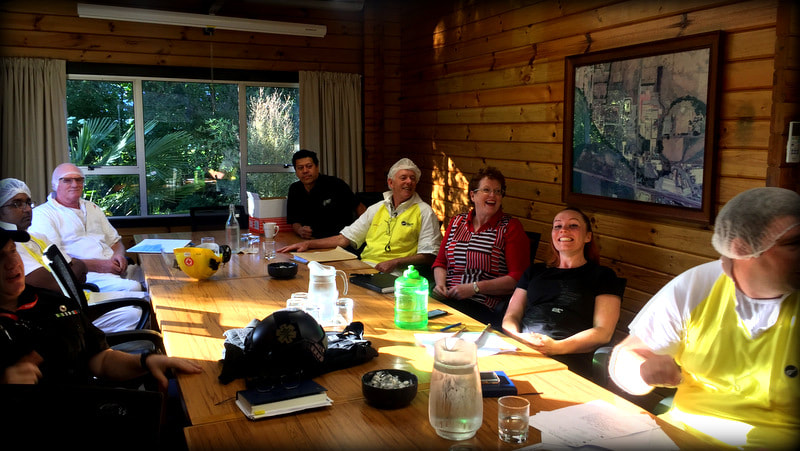
NZ Fishing Industry Literacy Training Sarahs Solutions Numeracy
Picture
Sarah's Solutions: Workplace Training
34 Walker Terrace, Te Kopuru, 0341, NZ
PO Box 151, Te Kopuru, 0391, New Zealand
Mobile: 027 316 8330
Email: [email protected]
Website Design: Hardwick Enterprises
Literacy, Numeracy and Communication 
Government Approved and Funded
Professional Delivery of Services

Qualified Tutors and Mentors
Making a Difference in NZ Industry
Improving Adult Literacy and Numeracy